- English
-
English

|
History |
Terephthalic acid came to prominence through the work of Winfield and Dickson in Britain around 1940. Earlier work by Carothers and coworkers in the United States established the feasibility of producing high molecular weight linear polyesters by reacting diacids with diols, but they used aliphatic diacids and diols. These made polyesters which were unsuitable to be spun into fibers. Winfield and Dickson found that symmetrical aromatic diacids yield high-melting, crystalline, and fiberforming materials; poly(ethylene terephthalate) (PET) has since become the largest volume synthetic fiber. |
|
Definition |
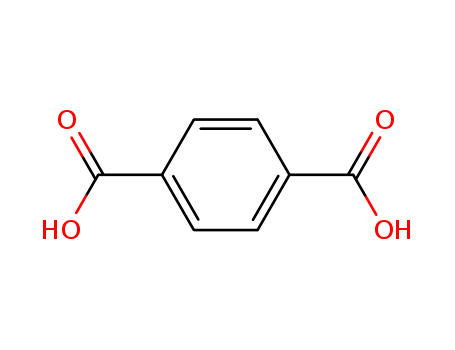
ChEBI: A benzenedicarboxylic acid carrying carboxy groups at positions 1 and 4. One of three possible isomers of benzenedicarboxylic acid, the others being phthalic and isophthalic acids. |
|
Application |
Virtually the entire world's supply of terephthalic acid and dimethyl terephthalate are consumed as precursors to polyethylene terephthalate (PET). World production in 1970 was around 1.75 million tones. By 2006, global purified terephthalic acid (PTA) demand had exceeded 30 million tonnes. There is a smaller, but nevertheless significant, demand for terephthalic acid in the production of poly butylene terephthalate and several other engineering polymers. |
|
Production Methods |
Terephthalic acid is produced by oxidation of p-xylene by oxygen in air: This reaction proceeds through a p-toluic acid intermediate which is then oxidized to terephthalic acid. In p-toluic acid, deactivation of the methyl by the electron withdrawing carboxylic acid group makes the methyl one tenth as reactive as xylene itself, making the second oxidation significantly more difficult . The commercial process utilizes acetic acid as solvent and a catalyst composed of cobalt and manganese salts, with a bromide promoter. |
|
Preparation |
The major commercial route to terephthalic acid which is suitable for the direct preparation of poly(ethylene terephthalate) is from p-xylene: p-Xylene is obtained largely from petroleum sources, being a product of the fractionation of reformed naphthas. The oxidation is carried out in the liquid phase. Typically, air is passed into a solution of p-xylene in acetic acid at about 200℃ and 2 MPa (20 atmospheres) in the presence of a catalyst system containing cobalt and manganese salts and a source of bromide ions. The terephthalic acid produced contains only small amounts of impurities (mainly p-carboxybenzaldehyde), which are readily removed. The acid is dissolved in water at about 2500 e and 5 MPa (50 atmospheres) and treated with hydrogen (which converts the aldehyde to p-toluic acid). The solution is then cooled to 100℃ and pure terephthalic acid crystallizes. |
|
Synthesis Reference(s) |
Chemistry Letters, 15, p. 299, 1986Journal of the American Chemical Society, 82, p. 2876, 1960 DOI: 10.1021/ja01496a051The Journal of Organic Chemistry, 44, p. 4727, 1979 DOI: 10.1021/jo00393a063 |
|
General Description |
White powder. |
|
Air & Water Reactions |
Insoluble in water. |
|
Reactivity Profile |
Terephthalic acid is a carboxylic acid. Terephthalic acid donates hydrogen ions if a base is present to accept them. This "neutralization" generates substantial amounts of heat and produces water plus a salt. Insoluble in water but even "insoluble" carboxylic acids may absorb enough water from the air and dissolve sufficiently in Terephthalic acid to corrode or dissolve iron, steel, and aluminum parts and containers. May react with cyanide salts to generate gaseous hydrogen cyanide. Will react with solutions of cyanides to cause the release of gaseous hydrogen cyanide. Flammable and/or toxic gases and heat are generated by reaction with diazo compounds, dithiocarbamates, isocyanates, mercaptans, nitrides, and sulfides. React with sulfites, nitrites, thiosulfates (to give H2S and SO3), dithionites (SO2), to generate flammable and/or toxic gases and heat. Reaction with carbonates and bicarbonates generates a harmless gas (carbon dioxide) but still heat. Can be oxidized by strong oxidizing agents and reduced by strong reducing agents. These reactions generate heat. May initiate polymerization reactions; may catalyze (increase the rate of) chemical reactions. |
|
Fire Hazard |
Flash point data for Terephthalic acid are not available. Terephthalic acid is probably combustible. |
|
Flammability and Explosibility |
Nonflammable |
|
Safety Profile |
Moderately toxic by intravenous and intraperitoneal routes. Mildly toxic by ingestion. An eye irritant, Can explode during preparation. When heated to decomposition it emits acrid smoke and irritating fumes. |
|
Potential Exposure |
TPA is used primarily in the production of polyethylene terephthalate polymer for the fabrication of polyester fibers and films. A high-volume production chemical in the United States. |
|
Purification Methods |
Purify the acid via the sodium salt which, after crystallisation from water, is re-converted to the acid by acidification with mineral acid. Filter off the solid, wash it with H2O and dry it in a vacuum. The S-benzylisothiuronium salt has m 204o (from aqueous EtOH). [Beilstein 9 IV 3301.] |
|
Incompatibilities |
Combustible; dust may form an explosive mixture with air. Compounds of the carboxyl group react with all bases, both inorganic and organic (i.e., amines) releasing substantial heat, water and a salt that may be harmful. Incompatible with arsenic compounds (releases hydrogen cyanide gas), diazo compounds, dithiocarbamates, isocyanates, mercaptans, nitrides, and sulfides (releasing heat, toxic and possibly flammable gases), thiosulfates and dithionites (releasing hydrogen sulfate and oxides of sulfur). Incompatible with oxidizers (chlorates, nitrates, peroxides, permanganates, perchlorates, chlorine, bromine, fluorine, etc.); contact may cause fires or explosions. Keep away from alkaline materials, strong bases, strong acids, oxoacids, epoxides. |
|
Waste Disposal |
Dissolve or mix the material with a combustible solvent and burn in a chemical incinerator equipped with an afterburner and scrubber. All federal, state, and local environmental regulations must be observed. |
InChI:InChI=1/C8H6O4/c1-9-5-13-18(24,15(9)22)7-11(8-21)6-12-14-17(3,4)20(14,26)16(23)10(2)19(12,13)25/h5-6,10,12-14,16,21,23-26H,7-8H2,1-4H3/t10-,12+,13-,14-,16-,18-,19-,20-/m1/s1
A variety of aromatic and aliphatic alde...
A simple and mild process for oxidation ...
-
In this communication, we describe p-xyl...
-
The MOF Co-BTC (BTC = benzenetricarboxyl...
Efficient oxidation system using reusabl...
A new aerobic route is introduced for th...
-
Furancarboxylic acids are promising biob...
-
In this study, the results of synthesis ...
Oxidative cleavage of C(OH)?C bonds to a...
A catalytic system for the synthesis of ...
-
A new high yield and selective electroch...
A novel dehydro-aromatization reaction u...
-
The development of mild and efficient pr...
-
In this paper we report a strong depende...
The oxidation of organic compounds by so...
The new crystalline modification of tere...
-
Funneling and functionalization of a mix...
Efficient photocatalytic oxygenation of ...
CeO2 nanoparticles exposed in (100) and ...
Despite significant methodological and t...
Cobalt(III) complex has been heterogeniz...
-
Benzoic acid is found to undergo carboxy...
In this study, we developed an efficient...
A series of N-alkyl pyridinium salts wer...
A new heterogeneous catalyst based on a ...
In this study, waste poly(ethylene terep...
The one-pot synthesis of terephthalic ac...
-
-
Urea-hydrogen peroxide complex (UHP) has...
Precise placement of multiple functional...
Furan carboxylic acids are useful chemic...
A novel method for the carbonylation of ...
Boomerang catalysis: A catalyst catchrel...
Novel, solid catalysts of μ3-oxo-bridged...
-
Stepwise oxygenation at the benzylic pos...
Acceptorless dehydrogenative coupling (A...
The invention provides a preparation met...
The selective α-C-C bond cleavage of unf...

p-Toluic acid

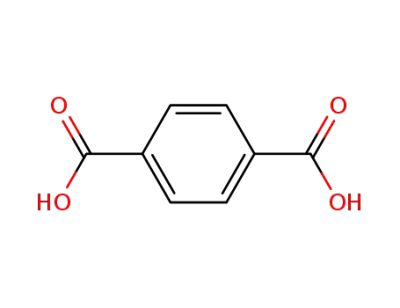
terephthalic acid


4,4'-(ethene-1,2-diyl)dibenzoic acid
| Conditions | Yield |
|---|---|
|
With
potassium peroxomonosulphate; sodium carbonate;
|
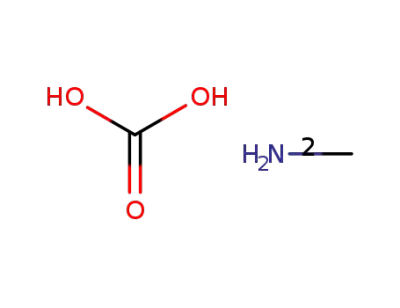
methylammonium carbonate
p-phenylene dimagnesium (2+); diiodide
terephthalic acid
| Conditions | Yield |
|---|---|
|
|

tetrachloromethane

(4-isopropylphenyl)acetonitrile

biphenyl-4-acetaldehyde

n-butyllithium
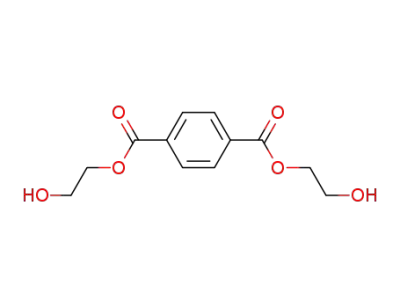
Bis(2-Hydroxyethyl)terephthalat
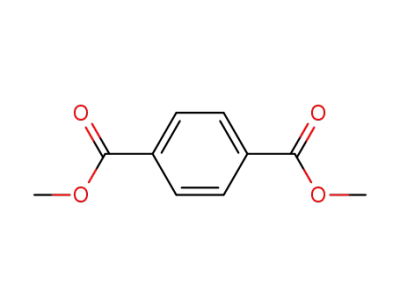
1,4-benzenedicarboxylic acid dimethyl ester

terephthalic acid dipropyl ester

terephthalonitrile
Address:Room 102, 1st Floor, East Office Building, No. 45 Pengwan Road, Qianwan Bonded Port Area, Qingdao Area, China (Shandong) Pilot Free Trade Zone 2024 2629 (A)Email:3755615463@qq.com
Tel:0571-87562572Phone:13091039633