- English
-
English

|
Air & Water Reactions |
Reacts with water to form hydrogen chloride(hydrochloric acid) |
|
Reactivity Profile |
Organophosphates, such as Ethyl dichlorophosphate, are susceptible to formation of highly toxic and flammable phosphine gas in the presence of strong reducing agents such as hydrides. Partial oxidation by oxidizing agents may result in the release of toxic phosphorus oxides. |
|
Health Hazard |
Inhalation of vapor irritates nose and throat. Contact with liquid causes severe burns of eyes and skin. Ingestion causes severe burns of mouth and stomach. |
|
Safety Profile |
A corrosive material that is very toxic to tissue. A severe eye, skin, and mucous membrane irritant. When heated to decomposition it emits very toxic fumes of Cland POx. |
|
General Description |
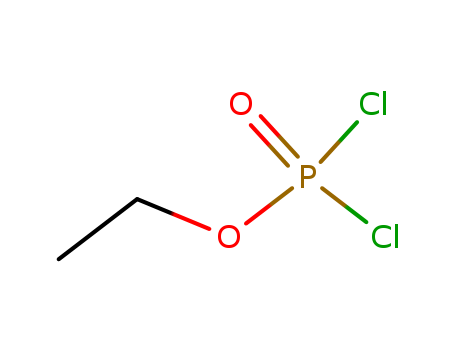
Ethyl dichlorophosphate is strongly irritating to skin. Ethyl dichlorophosphate may cause visible destruction or irreversible alterations in human skin tissue at the site of contact. Ethyl dichlorophosphate is very toxic by ingestion, inhalation, or by skin absorption. Ethyl dichlorophosphate may be combustible though Ethyl dichlorophosphate may require some effort to ignite. |
InChI:InChI=1/C2H5Cl2O2P/c1-2-6-7(3,4)5/h2H2,1H3
An inherently flame-retardant poly(lacti...
In previous papers we described procedur...
The cyclizations of L-(+)-prolinol 5 wit...
Disclosed herein are nucleosides, nucleo...
Disclosed herein are nucleosides, nucleo...
Disclosed herein are nucleosides, nucleo...
Twelve derivatives of hexadecylphosphoch...

ethanol


phosphorus pentachloride


chloroethane

diethyl chlorophosphate

ethyl phosphodichloridite
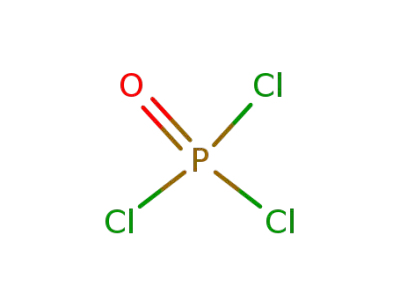
trichlorophosphate
| Conditions | Yield |
|---|---|
|
at -10 ℃;
|

diethyl ether
ethanol
phosphorus pentachloride
chloroethane
diethyl chlorophosphate
ethyl phosphodichloridite
trichlorophosphate
| Conditions | Yield |
|---|---|
|
at -10 ℃;
|

triethyl phosphate
ethanol
diethyl chlorophosphate

diethyl chloromethylphosphonate

N-ethylpyridinium
chloroethane

dimethyl ethylphosphonate
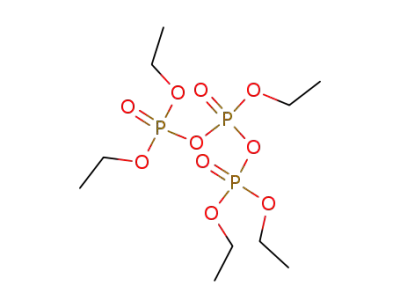
triphosphoric acid pentaethyl ester
Address:Room 102, 1st Floor, East Office Building, No. 45 Pengwan Road, Qianwan Bonded Port Area, Qingdao Area, China (Shandong) Pilot Free Trade Zone 2024 2629 (A)Email:3755615463@qq.com
Tel:0571-87562572Phone:13091039633